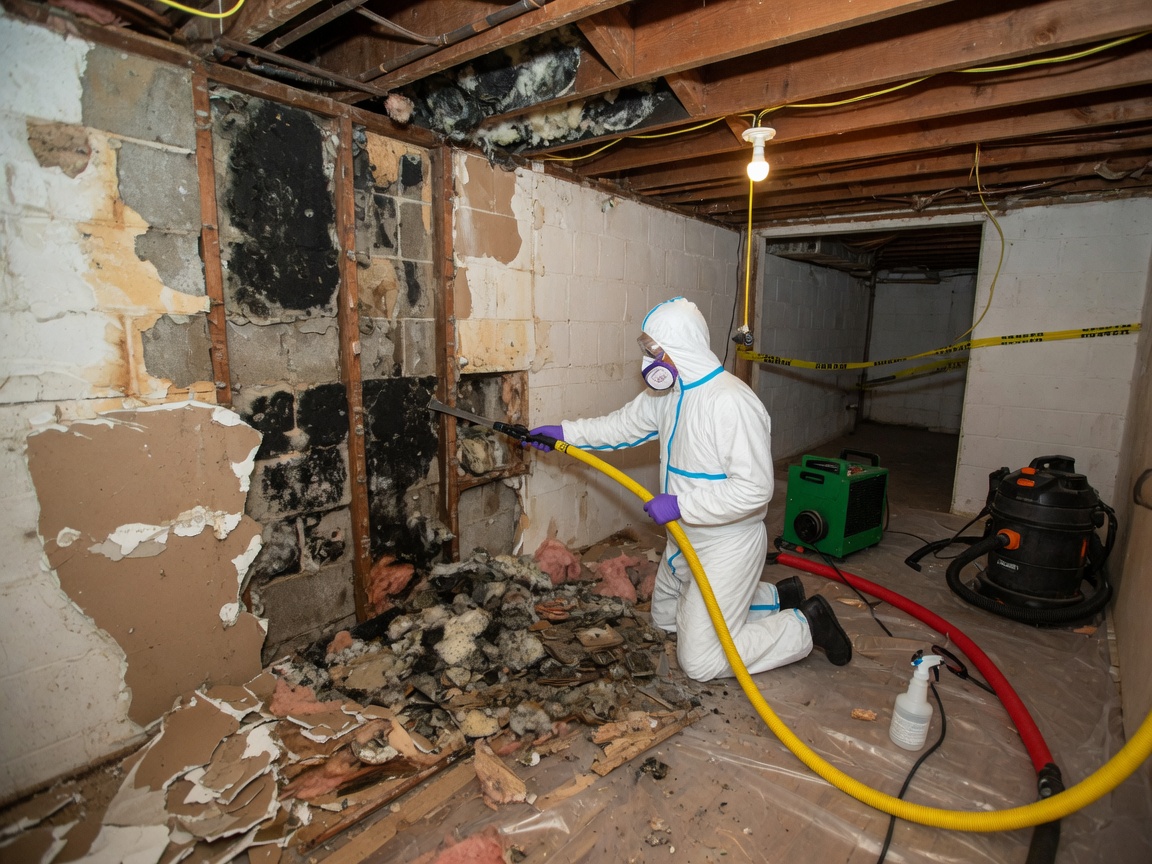
Cary basements in neighborhoods like Preston and Kildaire Farms often sit on clay-heavy Wake County soils that trap moisture after summer rains, allowing mold to spread behind drywall and under carpet before homeowners notice. We map air flow from HVAC returns and check sump pits first, because those spots turn into hidden reservoirs when mild winters keep ground temperatures above freezing and humidity lingers. Containment starts at the stairwell to protect the main floor, and we remove affected materials rather than encapsulate when the growth has penetrated porous wood or insulation.
Edge cases appear regularly in Amberly and older Downtown Cary homes where finished basements were added without proper vapor barriers. Once we open walls, we frequently find mold tracking along copper pipes or electrical boxes because the humid subtropical summers push condensation deep into cavities. We run negative air throughout the process and follow up with targeted drying to bring moisture levels below the threshold that supports regrowth, then document the work for any future real-estate questions.
Homeowners sometimes attempt bleach cleaning on visible spots only, which fails when the source is ongoing seepage from the foundation or poor grading around the Koka Booth Amphitheatre area lots. We always locate and correct the water entry point before final clearance testing, because untreated moisture will restart the cycle within a single season.
Technician insight
In Cary the thing that catches most people out with basement mold removal is the clay soil around Preston and Amberly that keeps foundations damp even after mild winters; homeowners seal the visible spot but skip regrading or French drains, so the mold returns the next humid summer.
Hidden growth behind finished wall in Amberly
A Preston homeowner noticed a musty smell after heavy July rain. We found mold behind baseboard and drywall near the sump pit where clay soil held moisture against the foundation. After removing affected sections, drying the cavity, and directing water away from the house, the odor disappeared and levels stayed dry through the following season.
Basement Mold Removal Services We Offer
✓Finished Basement Mold Removal
Removes mold from drywall, trim, and flooring in finished spaces while protecting living areas above.
✓Unfinished Basement Mold Remediation
Treats exposed joists, concrete walls, and stored items in open basements common in Preston and Amberly.
✓Sump Pump Pit Mold Treatment
Cleans and dries sump areas where Wake County clay soils keep standing water present year-round.
✓Basement Wall Cavity Mold Removal
Opens and treats wall cavities where condensation from humid summers has allowed hidden growth.
✓Post-Leak Basement Mold Cleanup
Addresses mold after appliance or pipe leaks that frequently occur in Kildaire Farms homes.
Basement Mold Removal Cost in Cary, NC
| Service | Typical Range | What Affects It |
|---|---|---|
| Small visible patch under 50 sq ft | $650–$1,200 | Increases if wall cavities are involved |
| Standard basement section 100–200 sq ft | $1,400–$2,800 | Depends on finished vs unfinished and drying time |
| Whole basement with multiple walls | $3,200–$5,500 | Common in older Kildaire Farms homes with prior leaks |
Ranges are typical for Cary, NC and confirmed with an exact written quote before any work starts.
How it works
- 1
On-Site Assessment
We inspect the full basement, test moisture in walls and floors, and identify the water source tied to local soil or grading.
- 2
Containment Setup
Plastic barriers and negative air machines isolate the work zone from the rest of the Cary home.
- 3
Material Removal and Cleaning
Affected drywall, insulation, and trim are removed; remaining surfaces are HEPA vacuumed and treated.
- 4
Drying and Clearance
Dehumidifiers and air movers run until levels stabilize, followed by independent moisture and air checks.
Pricing
Pricing varies by square footage, whether walls must be opened, and how many days of drying equipment are required.