Cary sits in a humid subtropical zone where summer moisture loads push into attics and crawlspaces of homes built from the 1980s onward in neighborhoods like Preston and Kildaire Farms. Older ranch and two-story stock often has unvented or poorly sealed crawlspaces that trap ground moisture rising through clay soils common across Wake County. When HVAC ducts run through these spaces, condensation on metal and flex lines feeds surface growth that spreads into living areas once temperatures drop in shoulder seasons.
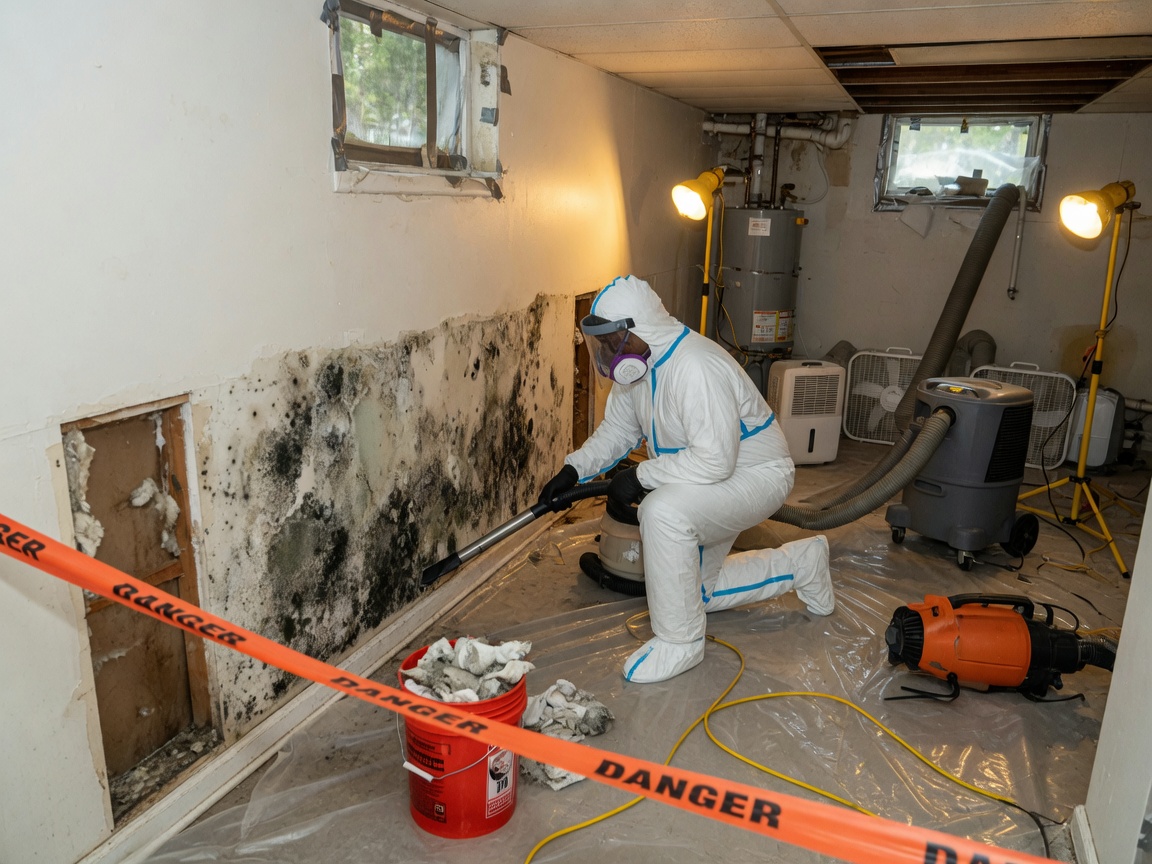
Remediation work here starts with negative-air containment to keep spores from migrating into finished spaces, followed by HEPA vacuuming and removal of affected drywall or insulation. In Amberly and Downtown Cary properties with finished basements or bonus rooms over garages, hidden growth behind tile or under carpet pad is common after roof leaks or AC condensate line failures. Technicians must map moisture with meters because the mild winters do not dry structures the way colder climates would, leaving residual dampness that restarts colonies within weeks if not fully addressed.
Local code in Wake County requires proper disposal of contaminated materials and verification that relative humidity stays below 60 percent post-job. Homes near Koka Booth Amphitheatre or the Cary Arts Center often sit on lots with poor grading that channels rain toward foundations, so exterior corrections are sometimes needed alongside interior work to prevent recurrence.
Technician insight
In Cary the thing that catches most people out with Mold Remediation is how clay soils around Preston and Kildaire Farms keep crawlspaces damp even in mild winters, so simply killing surface mold without fixing the moisture source means the same growth returns within one humid summer.
Hidden Growth Behind Finished Garage Ceiling
A Preston homeowner noticed musty smell after an AC condensate line leaked. Inspection found growth on drywall above the garage that had migrated into the bonus room. We contained the space, removed the wet drywall and insulation, treated joists, and added a small dehumidifier tied to the home's existing system. Humidity stayed under 55 percent through the following summer with no return of odor.
Mold Remediation Services We Offer
✓Crawlspace Mold Remediation
Removes growth from pier-and-beam and slab-edge crawlspaces common in Preston and Kildaire Farms homes where clay soils hold moisture year-round.
✓Attic Mold Remediation
Addresses condensation and roof-leak growth in unvented attics typical of 1990s and 2000s Cary subdivisions near Amberly.
✓HVAC Duct Mold Cleaning
Cleans and treats supply and return ducts that carry spores between crawlspaces and living areas in Wake County homes.
✓Drywall and Insulation Removal
Cuts out and disposes of contaminated wall and ceiling materials while maintaining negative pressure to protect adjacent rooms.
✓Post-Flood Mold Remediation
Handles growth after appliance leaks or heavy rain events that affect finished basements in older Downtown Cary properties.
✓Moisture Source Correction
Identifies and fixes grading, gutter, or AC condensate issues that keep feeding mold in humid Wake County conditions.
Mold Remediation Cost in Cary, NC
| Service | Typical Range | What Affects It |
|---|---|---|
| Small isolated area (under 10 sq ft) | $450–$850 | Single wall or ceiling section with easy access |
| Crawlspace remediation | $1,200–$2,800 | Size of space, amount of insulation, and soil moisture level |
| Attic remediation | $900–$2,400 | Rafter coverage, duct cleaning needs, and insulation type |
| HVAC duct treatment add-on | $350–$650 | Number of runs and whether flex or rigid duct is affected |
Ranges are typical for Cary, NC and confirmed with an exact written quote before any work starts.
How it works
- 1
Initial Inspection
Technician measures moisture, maps visible and hidden growth, and notes construction details specific to the Cary neighborhood.
- 2
Containment Setup
Plastic barriers and negative-air machines isolate the work zone so spores do not spread into occupied areas of the home.
- 3
Removal and Cleaning
Affected materials are removed, surfaces are HEPA-vacuumed and treated, and HVAC components are addressed if needed.
- 4
Drying and Verification
Dehumidifiers and air movers bring humidity down; post-work readings confirm levels safe for re-occupancy.
- 5
Prevention Recommendations
Written notes cover grading fixes, ventilation upgrades, or dehumidifier settings suited to local weather patterns.
Pricing
Upfront quotes after inspection; final cost depends on square footage, access difficulty, and whether HVAC components are involved.