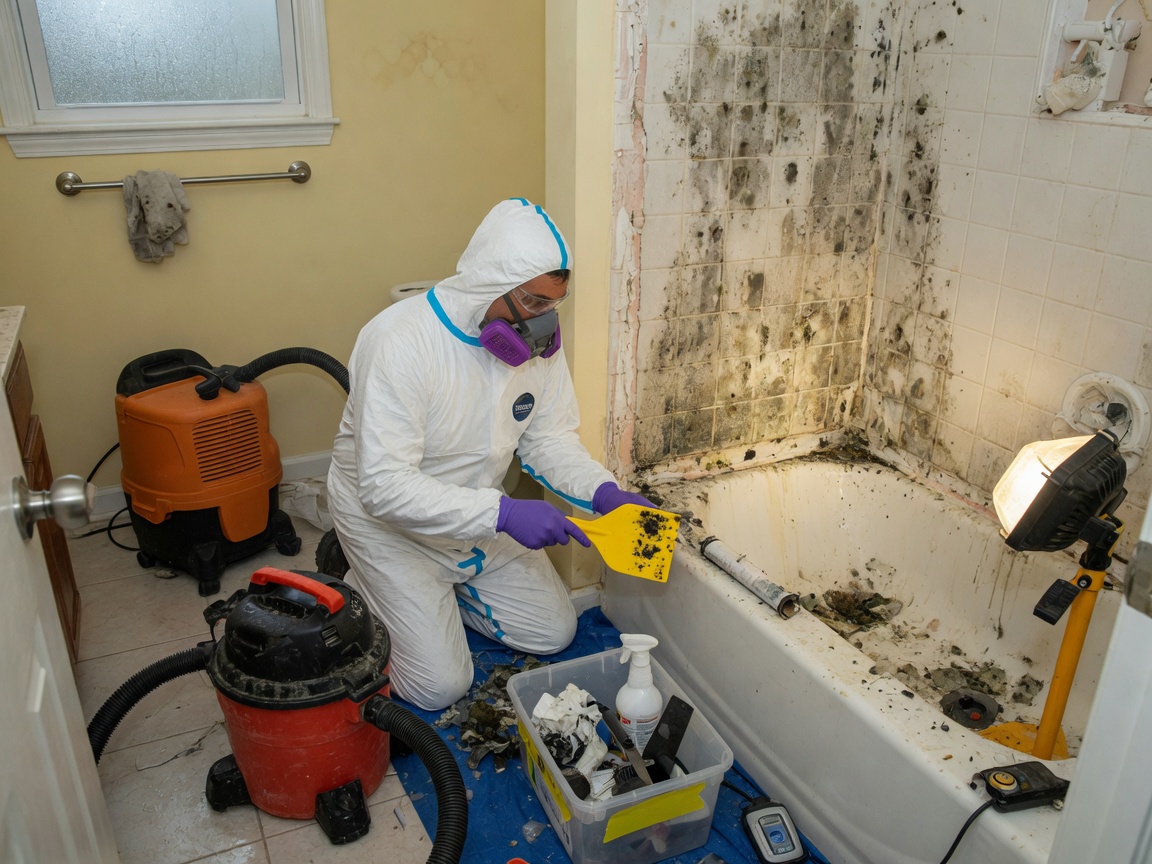
Cary homes built in the 1980s and 1990s in neighborhoods like Kildaire Farms and Preston often have original tile showers with failing grout and thinset that trap moisture behind the wall. Once summer humidity climbs above seventy percent, that trapped water feeds black mold along the tub flange and into the drywall behind the vanity. Standard bleach wipes only address surface growth and leave the root cause untouched, allowing spores to migrate through HVAC returns into adjacent bedrooms.
Remediation starts with isolating the bathroom using negative air machines exhausted through a window facing the street rather than a shared courtyard. Technicians cut out saturated drywall at least twelve inches past visible staining, bag the debris inside the containment, and treat exposed studs with an EPA-registered antimicrobial. In homes near the Cary Arts Center where crawl spaces sit close to the water table, we also pull baseboards to check for wicking up the sole plate before any new drywall goes back in.
After removal we run commercial dehumidifiers until moisture readings on the subfloor drop below twelve percent. Homeowners in Amberly frequently request a final fogging step to address airborne spores that settle on towels and bath mats. We always leave the space open for forty-eight hours so residents can inspect the framing themselves before new tile or paint is installed.
Local code in Wake County requires permits only when structural members are altered, but we still document every cut and photo the hidden conditions for insurance claims common after heavy spring rains.
Technician insight
In Cary the thing that catches most people out with Bathroom Mold Removal is the single layer of drywall behind the tub in 1980s Kildaire Farms homes. Once humidity from the shower hits the paper facing, mold travels straight into the stud bay and under the sole plate toward the crawl space. Homeowners who only repaint the visible spot watch it return every spring.
Hidden Growth Behind Vanity in Preston
A Preston homeowner noticed black spots along the baseboard after a humid July. We opened the vanity and found saturated drywall extending four feet into the wall where an old supply line had sweated for years. After removing the affected sections, treating the studs, and drying the cavity for three days, the bathroom passed clearance testing with no recurrence six months later.
Bathroom Mold Removal Services We Offer
✓Shower Stall Mold Remediation
Remove mold from tile, grout, and backer board in walk-in showers common in Preston and Amberly homes while protecting adjacent drywall.
✓Vanity and Sink Area Treatment
Address hidden mold behind bathroom cabinets where leaking supply lines meet humid air in older Kildaire Farms properties.
✓Grout Line Cleaning and Sealing
Deep clean discolored grout and apply penetrating sealer to reduce future moisture absorption in high-use Cary bathrooms.
✓Tub Flange and Drywall Repair
Cut out and replace water-damaged drywall at the tub edge before reinstalling tile, preventing recurrence in Wake County humidity.
✓Exhaust Fan and Ventilation Upgrade
Install or repair bathroom exhaust fans to pull moist air outside rather than into attics common in Downtown Cary cottages.
Bathroom Mold Removal Cost in Cary, NC
| Service | Typical Range | What Affects It |
|---|---|---|
| Small shower stall remediation | $450–$750 | Surface growth only, no drywall removal |
| Full bathroom containment and removal | $900–$1,600 | Includes vanity wall and tub flange work |
| Hidden mold behind cabinet | $350–$650 | Requires cabinet disassembly and drying |
| Post-remediation verification | $150–$250 | Moisture readings and air sampling |
Ranges are typical for Cary, NC and confirmed with an exact written quote before any work starts.
How it works
- 1
On-Site Inspection
We examine all bathroom surfaces, use moisture meters on walls and floors, and check for hidden growth behind fixtures in your specific Cary neighborhood.
- 2
Containment Setup
Plastic barriers and negative air machines isolate the bathroom so spores do not spread to living areas or HVAC systems.
- 3
Removal And Treatment
Affected materials are removed, surfaces are cleaned with antimicrobial agents, and hidden cavities are treated before drying begins.
- 4
Drying And Verification
Commercial equipment reduces moisture levels, followed by post-remediation testing to confirm the space meets industry dry standards.
Pricing
Cost depends on square footage affected, whether subfloor or framing must be replaced, and access in older Cary homes.