2026-09-04 · Tom Reynolds
Testing Air Quality Yourself Before Calling a Pro in Cary
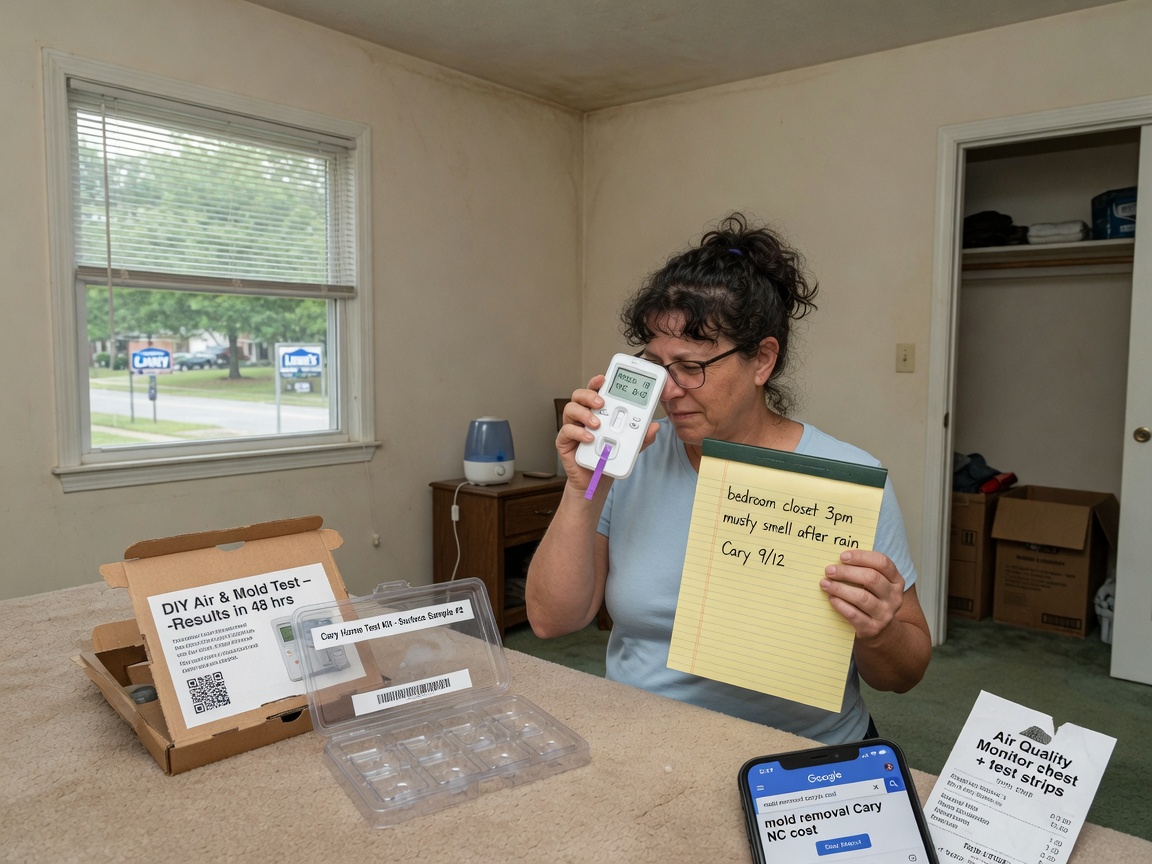
You can run basic spore trap or petri dish tests in your Cary home to detect elevated mold levels before contacting a pro, though these kits typically show results in 48-72 hours and require lab analysis for spore identification.
How Cary's Climate Influences Mold Growth
Wake County's humid subtropical climate brings hot summers and mild winters that keep indoor humidity high, especially in older homes around Downtown Cary and Amberly. This moisture supports mold on drywall and in HVAC systems more readily than in drier regions. Homes in Preston and Kildaire Farms often feature crawl spaces and attics that trap humidity from nearby Raleigh's weather patterns, leading to hidden growth behind walls. Seasonal rain increases basement seepage in properties built before 1990, raising spore counts that DIY tests can initially flag. Terrain with clay-heavy soils holds water longer, pushing moisture into foundations during fall storms.
Steps for DIY Air Quality Testing
Start by selecting a spore trap kit from a hardware store and placing it in high-risk spots like bathrooms or near windows in your Preston home. Run the pump for five minutes per room, then seal and send samples to the lab listed on the package. Record indoor humidity with a digital meter aiming below 55 percent, and check for visible water stains around the Koka Booth Amphitheatre area homes where summer storms are common. Compare results against outdoor controls taken the same day to see if indoor levels exceed normal baselines. Repeat tests after running dehumidifiers for 48 hours to track changes.
Limits of Home Testing Kits
DIY methods miss hidden mold in finished basements common to Cary properties or behind insulation in Kildaire Farms attics. Kits detect total spores but cannot identify toxic species or pinpoint sources without professional equipment. False negatives occur when airflow patterns in larger homes like those in Amberly dilute concentrations during sampling. Lab turnaround adds days, during which growth can spread in the region's consistent humidity. These tests serve as screening tools only and do not replace full assessments for insurance or health concerns.
When Professional Mold Testing Makes Sense
Schedule Mold Testing after DIY results show spore counts above outdoor levels or when symptoms persist in family members. Pros use air pumps calibrated for Wake County conditions and thermal imaging to locate moisture in walls around the Page-Walker Arts & History Center neighborhoods. This step clarifies whether remediation is needed before investing in Mold Removal. Review How to Spot Mold in Older Cary Neighborhoods for visual clues that pair with your test data.
Next Steps After Initial Testing
If readings indicate problems, document everything with photos and humidity logs for any future Mold Inspection. Residents in areas like Amberly often combine DIY data with pro reports to address crawl space issues tied to local soil conditions. Track seasonal spikes during summer to time follow-up checks. This approach keeps costs lower while confirming when expert help is required in Cary.