2026-09-04 · Tom Reynolds
Winter Heating and Condensation Mold in Cary Attics
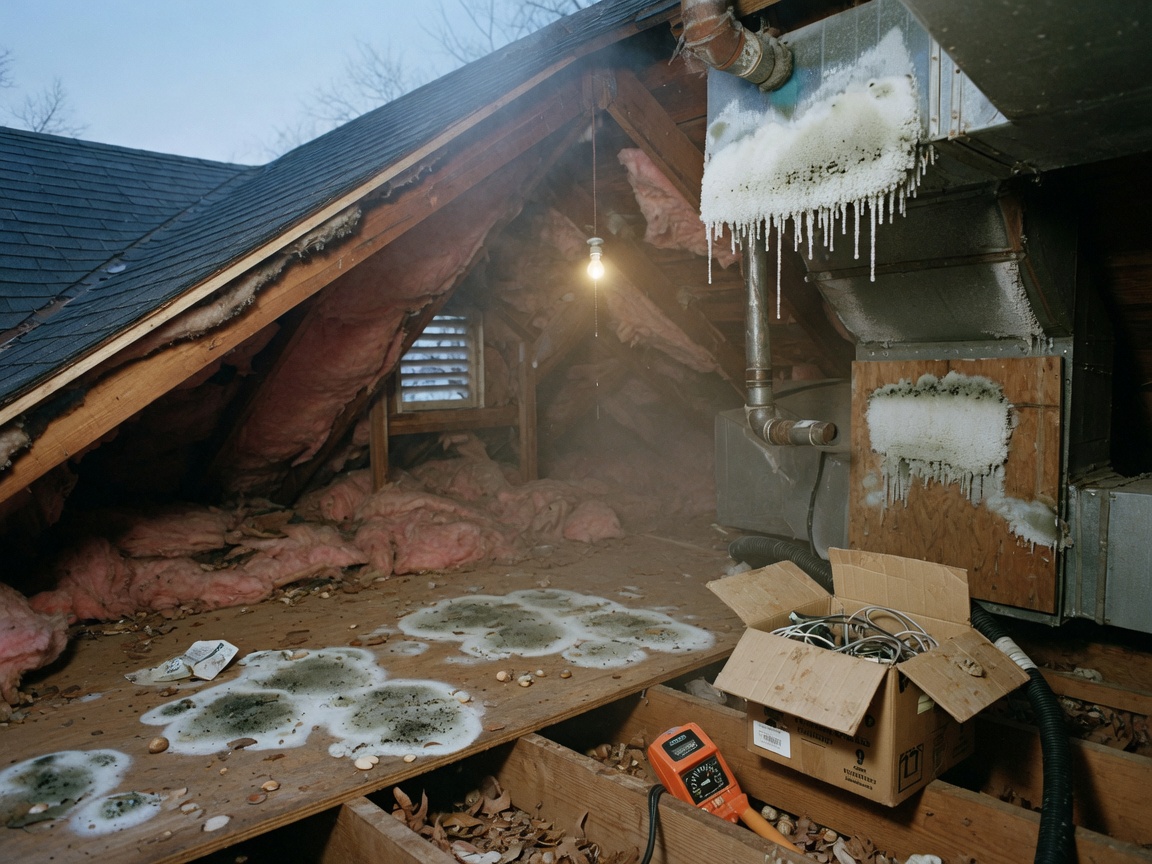
Winter heating in Cary attics creates condensation mold when indoor air at 68–72°F meets roof sheathing cooled to 35–45°F overnight, producing moisture films that support growth within 48 hours on uninsulated surfaces common in 1980s–1990s homes throughout Preston and Kildaire Farms.
How Winter Heating Drives Condensation in Cary Attics
Cary's mild winters still bring 20–30°F overnight drops that chill asphalt shingles and plywood decks while furnaces push heated air upward through ceiling penetrations. In homes built before 2000 in Preston, fiberglass batts often leave gaps at eaves and around recessed lights, allowing moist air to reach cold surfaces. The resulting dew point condensation soaks OSB and rafters, especially on north-facing slopes that stay shaded longer. Downtown Cary properties with added insulation in the last decade still see issues where bathroom exhausts vent directly into attics rather than outside. These conditions differ from summer humidity problems because the moisture source is indoor heating rather than outdoor rain.
Common Signs in Amberly and Kildaire Farms Attics
Homeowners notice dark staining along rafters or on the underside of roof decking after the first cold snap. Musty odors appear strongest when the furnace runs in the morning. In Kildaire Farms, cellulose insulation that has settled shows water rings where condensation dripped for weeks. White or gray powdery residue on metal HVAC ducts signals repeated moisture cycles. Checking insulation depth with a ruler reveals thin spots under 8 inches that allow heat loss and surface cooling. These visual cues appear earlier in attics with poor ventilation baffles, a frequent finding in 1990s construction across Amberly.
Moisture Sources Specific to Wake County Winters
Furnace combustion air drawn from living spaces pulls additional humidity indoors during January and February. Dryer vents that terminate in attics instead of through the roof add 1–2 gallons of moisture daily in households with frequent laundry. Ice dams along eaves, though rare, force meltwater under shingles and into insulation. Raleigh's urban heat island effect keeps daytime temperatures slightly higher, increasing the daily temperature swing inside Cary attics compared with rural parts of the county. Each of these sources raises attic relative humidity above 60% even when outdoor air stays dry.
Practical Steps for Cary Homeowners
Add 6-inch insulation baffles at eaves to maintain airflow from soffit vents to ridge vents. Seal recessed light fixtures with airtight covers rated for insulation contact. Route bathroom and kitchen exhausts through the roof with insulated ductwork. Increase attic insulation to R-38 minimum using blown cellulose that fills gaps around wiring and pipes. These changes reduce the temperature difference that drives condensation without requiring full roof replacement. Attic Mold Removal becomes necessary once staining covers more than a few square feet or insulation shows visible saturation.
When Professional Assessment Helps
If black spotting appears on multiple rafters or HVAC ducts show corrosion, schedule an inspection before spring warming accelerates growth. Mold Remediation teams familiar with Cary's housing stock can map moisture with infrared cameras and confirm hidden growth behind insulation. How to Spot Mold in Older Cary Neighborhoods details additional clues found in Preston crawl spaces that often connect to attic issues. Our Cary-based team is available Mon–Fri 8am–6pm and Sat 9am–2pm to evaluate these winter-specific conditions before they spread to living spaces.